Italy has substantially expanded its efforts to ensure a safer, more transparent, and education-driven gambling environment. While already home to one of Europe’s most regulated betting systems, the rapid rise of mobile and online gaming has encouraged institutions and operators to prioritise prevention, early intervention, and public awareness. Today, responsible gambling, consumer education, and digital protections sit at the core of the country’s national strategy, supported by regulators, licensed operators, and public-health organisations.
Italy’s responsible-gambling framework has steadily strengthened over the past twenty years, shaped by progressive reforms focused on consumer safety and market integrity.
This milestone introduced tighter advertising rules, new safeguards for minors, and enhanced monitoring obligations for operators.
Reference: The role of ADM in regulating gambling is detailed on the official portal of the Agenzia delle Dogane e dei Monopoli (ADM), Italy’s gaming authority.
This law reinforced the certification requirements for ADM-licensed online platforms. ADM also outlines its FAQ on regulated gambling systems.
This reform established one of Europe’s strictest bans on gambling advertising, positioning Italy among the earliest adopters of strong promotional restrictions.
Recent regulatory updates have accelerated the country’s shift toward modernised, safety-first gambling through:
International assessments note that Italy’s updated licensing model requires substantial financial and compliance commitments from operators.
As mobile betting and intuitive gambling apps grow in popularity, institutions have strengthened prevention measures aimed at young audiences. Regional administrations, educators, and certified psychologists now hold workshops covering:
This education-driven strategy sets Italy apart from many other European markets.
ADM promotes nationwide responsible-gambling standards through physical retail channels and digital platforms. Its initiatives include informational materials, support lines, and behavioural-awareness tools. A scientific perspective on public-health approaches to gambling can be found in The Lancet Public Health Gambling Commission (Lancet).
The RUA enables individuals to exclude themselves from all licensed online and land-based gambling. Partly inspired by international models such as GAMSTOP, the system aligns with broader global trends in cross-operator exclusion.
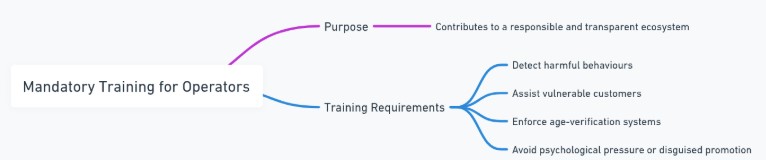
All licensed operators must train their teams to:
These requirements contribute to a safer, more accountable ecosystem.
Licensed online operators must implement advanced protection mechanisms, including:
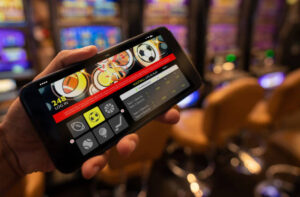
These safeguards are particularly relevant within betting and poker apps featuring intuitive interfaces or self-imposed deposit limits, which help maintain structured spending habits and reduce impulsive activity.
Research on supply-side interventions confirms that such tools meaningfully reduce gambling-related harm.
As digital wallets gain popularity, regulators warn of potential risks associated with linking systems like Apple Pay to iGaming platforms. Instant transfers, while convenient, can encourage impulsive decisions if not paired with spending controls and identity verification.
ADM and the Ministry of Economy have intensified their crackdown on unlicensed operators, blocking hundreds of illegal sites annually. Recent enforcement actions include:
European regulators have also increased cooperation on data-sharing to combat cross-border illegal gambling. Furthermore, Italy has imposed penalties on social platforms breaching gambling-advertising rules. A comparative international analysis of marketing restrictions is available in the GambleAware research document.
| Year | Reform | Core Objective |
|---|---|---|
| 2012 | Balduzzi Decree | Youth protection, advertising limits |
| 2016 | Stability Law | Stronger certification for online platforms |
| 2018 | Decreto Dignità | Advertising ban |
| 2020+ | National Self-Exclusion (RUA) | Centralised protection and prevention |
| 2023–24 | Sector Reform | Transparency, digital monitoring, safer licensing |
Comment: Italy’s trajectory reflects a shift from baseline regulation to a sophisticated, protection-oriented model.
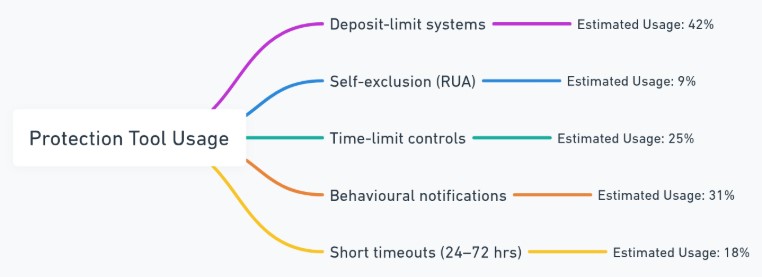
| Protection Tool | Estimated Usage |
|---|---|
| Deposit-limit systems | 42% |
| Self-exclusion (RUA) | 9% |
| Time-limit controls | 25% |
| Behavioural notifications | 31% |
| Short timeouts (24–72 hrs) | 18% |
Comment: Deposit-limit mechanisms remain the most widely adopted tool among players.
The UK’s mature market features extensive consumer-protection rules, though some observers argue that advertising reforms lagged behind Italy’s strict standards.
The DGOJ has implemented measures similar to Italy’s, particularly in advertising restrictions and youth-oriented protections.
France’s ANJ maintains tight rules for online gambling, while Italy stands out for its strong emphasis on school-based education and public awareness.
Italian consumers benefit from:
These advantages are increasingly relevant as digital and mobile entertainment habits evolve.
Operators face higher compliance costs and stricter transparency requirements. However, these efforts strengthen consumer trust and reinforce long-term market credibility. Major Italian operators such as SISAL continue aligning their platforms with ADM’s standards, illustrating how established brands can help shape a safer and more reliable industry.
Italy has developed one of Europe’s most comprehensive protective gambling frameworks, combining regulation, enforcement, education, and advanced digital safeguards. With mobile behaviour and digital-wallet usage continuing to rise, Italy’s experience underscores the importance of merging innovation with responsibility.
Expected future trends include:
By maintaining this balance between consumer safety and technological advancement, Italy is positioned to remain a leading reference point for responsible-gambling policy worldwide.
Related
Online Gambling in Britain: Participation, Trends and Frequency
From Sports to Casino: How Brazil’s Digital Behavior is Shaping New Gaming Patterns