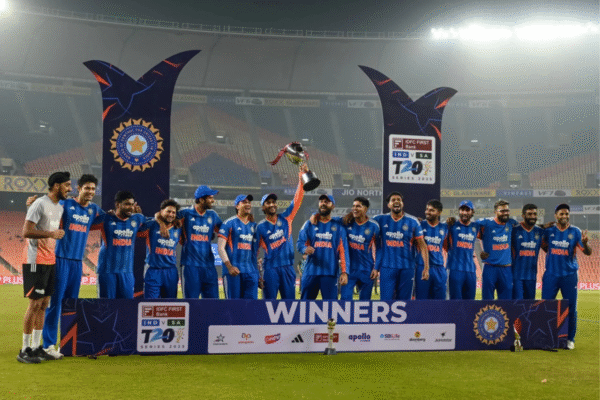


India have not lost a single T20I series, including Asia Cup 2025, since July 2024.
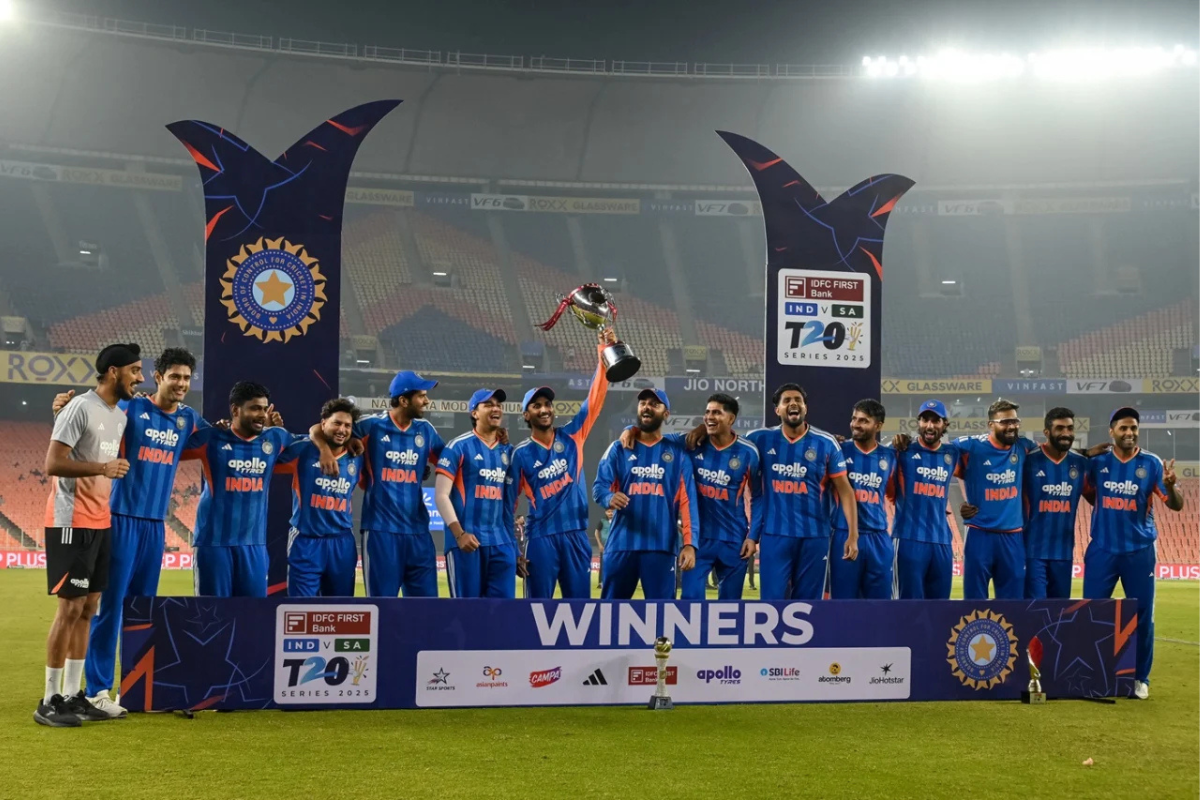
When India clinched the T20 World Cup in 2024, it ended their prolonged 17-year wait for the ICC title and introduced a fearless and ultra-aggressive approach to T20 cricket. The team management, led by Gautam Gambhir and captain Suryakumar Yadav, did not just celebrate it but took it to the next level and built a nearly invincible squad heading into the T20 World Cup 2026, co-hosted by India and Sri Lanka, starting February 7.
India’s dominance in the shortest format is evident from stats: India have won 22 of their last 27 T20I matches and lost only five over the course of 18 months. Additionally, they haven’t lost a single series, including the Asia Cup 2025. It is a testament to India’s aggressive template under the captain-coach duo of Gambhir and Suryakumar Yadav that has enhanced the Men in Blue’s attacking approach, combining it with flexibility and smart tactics.
So, let’s have a look at four key strategic changes that have made India a nearly unbeatable team as they head into the T20 World Cup 2026.
Post T20 World Cup 2024, India’s biggest improvement has been in how they manage their batting order. Instead of assigning fixed positions, the coaching staff encouraged players to adapt to match situations by slotting them across various batting positions.
This phase of experimentation not only helped the management understand how they can bring the best out of their players, but it also gave a valuable experience for players batting under pressure and out of their comfort zone.
It is evident from the fact that none of India’s batters from the T20 World Cup 2026 squad has played at one fixed position in the last 18 months.
Abhishek Sharma played most of his innings as an opener and emerged as India’s leading run-scorer in the format since July 2024. While the southpaw has piled up 1,091 runs (second-most by a batter from a Test-playing nation) at an average of 37.62 and an impressive strike rate of 190.40, including two hundreds and six fifties, he has also batted at No. 3 on three occasions.
Sanju Samson shared a good partnership with Abhisek at the top, which allowed him to find his form, amassing 454 runs at a strike rate of 181.60, even hitting three hundreds in just 14 innings. Apart from opening, Samson has batted thrice at No.3, once at No.4, and four times at No.5.
Tilak Varma has been a standout performer at No.3 with 420 runs at 140.66 and 168.80 strike rate. He has fared well at different positions: scoring 324 runs in 10 innings at an average of 54, including a fifty.
Suryakumar Yadav also boasts an exceptional record at No. 3, scoring 377 runs at a strike-rate of 157.75, but has struggled at other positions. At No.4, Suryakumar has managed just 63 runs in 10 innings at 6.30 average with a 96.92 strike rate.
Similarly, Hardik Pandya, Axar Patel, Shivam Dube and Rinku Singh have played across different numbers in the batting order, allowing India to rotate finishers based on the opposition. This willingness to place players in various roles has given the batting line-up true flexibility, making it resilient against collapses and tactical traps.
| Innings for India post T20 World Cup 2024 | |||||||
| Player Name | Opening | No.3 | No. 4 | No. 5 | No. 6 | No. 7 | No. 8 |
| Abhishek Sharma | 30 | 2 | NA | NA | NA | NA | NA |
| Sanju Samson | 14 | 3 | 1 | 4 | NA | NA | NA |
| Tilak Verma | NA | 7 | 10 | NA | 1 | 1 | NA |
| Suryakumar Yadav | NA | 17 | 10 | 1 | NA | NA | NA |
| Hardik Pandya | NA | NA | 2 | 9 | 8 | 1 | NA |
| Rinku Singh | NA | NA | 2 | 3 | 4 | 5 | NA |
| Shivam Dube | NA | 2 | NA | 3 | 6 | 1 | 2 |
| Axar Patel | NA | 1 | NA | 4 | 1 | 4 | 6 |
| Washington Sundar | NA | NA | NA | NA | 2 | 3 | 4 |
India’s second major change came from their spin attack. While Kuldeep Yadav had already shone in the 2024 victory, the return of Varun Chakaravarthy under Gambhir’s tenure has proven to be a masterstroke. The two have formed one of the most dangerous spin combinations in world cricket, with Axar Patel adding depth and flexibility with versatility.
Since mid-2024, Varun has taken 53 wickets in 25 innings at an average of 12.94, with an economy rate of 7.22, emerging as India’s leading wicket-taker in T20I cricket. This also included one four-wicket haul and two five-wicket hauls, highlighting his ability to run through any batting line-ups without really depending on the nature of the pitches.
Kuldeep, working alongside him, has bagged 21 wickets in just nine innings, averaging an impressive 10.23 with an economy rate of 7.04, solidifying India’s advantage in the middle overs.
Supporting them is Axar Patel, who not only adds balance with 24 wickets in 21 innings at an economy rate of 6.96, but also provides a powerplay bowling option. This allows India to save Jasprit Bumrah or Arshdeep Singh’s overs for the death. The left-hander also serves as a versatile batter who can stabilize or accelerate depending on the situation and bat anywhere from No.3 to No.8.
This spin trio strategy removes the old dilemma between batting depth and wicket-taking ability without affecting the depth in batting, a question that troubled India for years.
ALSO READ:
During the 2024 championship run, India relied heavily on Hardik Pandya to finish matches. But in the last 18 months, the team management has developed Dube and Rinku Singh as co-finishers by exposing them to difficult situations consistently, even when Hardik Pandya was in the mix.
In the final overs (16–20), while Hardik scored 253 runs at a strike rate of 176.92, Dube smashed 108 runs off just 54 balls with a strike rate of 200, and Rinku maintained a strike rate of 168.18, reflecting the duo’s growth as finishers.
This shared responsibility will remove the pressure from the Baroda all-rounder, which will allow him bat with more freedom, adding firepower to India’s batting in the death overs.
Despite making consistent changes in the batting lineup, India didn’t make many significant changes to their bowling attacks. Since his return from injury during the Indian Premier League (IPL) 2026, Jasprit Bumrah has been consistently featuring in the T20I team and leading the pace attack with Arshdeep Singh, the joint highest wicket-taker in the T20 World Cup 2024, offering support from the other end, and Harshit Rana serving as a backup. Axar, Kuldeep, Washington, and Varun are looking after the spin department.
Something for which the team management and captain don’t get much credit is for developing backup bowling options among the top seven batters. Gambhir and Surya have consistently asked Shivam Dube and Abhishek Sharma for contributions with the ball, bowling them under pressure, sometimes even opening the attack with them.
Since the 2024 World Cup, Dube has bowled 33.3 overs, taking 15 wickets at an average of 18.53 and an economy of 8.29. Abhishek has rolled his arm for 23 overs across 14 innings, picking up six wickets at an economy of 8.52. Even part-timers like Suryakumar (two wickets in one over), Tilak Varma (one wicket in 2.3 overs), and Rinku Singh (two wickets in one over) have turned their arm over, indicating India’s strategy of developing part-time options, as it allows the captain to be flexible with his bowling options if a frontline bowler has a bad day.
With the T20 World Cup 2026 taking place in India, the hosts know the conditions on offer and have built a strong squad, which has come after some tough calls in the process.
However, it all comes down to how well they can execute their plans and whether they will be able to perform to their potential on a given day. With eight players from the championship-winning squad featuring in the India squad for the T20 World Cup 2026, India further boasts a nice blend of experience and youth. If this set of players continues to dominate the format the way they are doing it now, no team might be able to stop India from lifting that elusive silverware nearly two months later at the world’s biggest cricket stadium in Ahmedabad.
India Squad for T20 World Cup 2026: Suryakumar Yadav (c), Abhishek Sharma, Tilak Varma, Sanju Samson, Shivam Dube, Ishan Kishan, Hardik Pandya, Arshdeep Singh, Jasprit Bumrah, Harshit Rana, Varun Chakaravarthy, Kuldeep Yadav, Axar Patel, Washington Sundar, Rinku Singh.
For more updates, follow CricXtasy on Facebook, Instagram, Twitter, and YouTube.