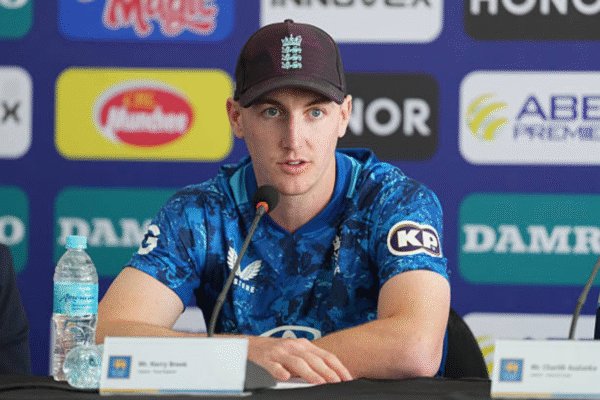


The T20 World Cup 2026 will mark his first ICC tournament as captain.
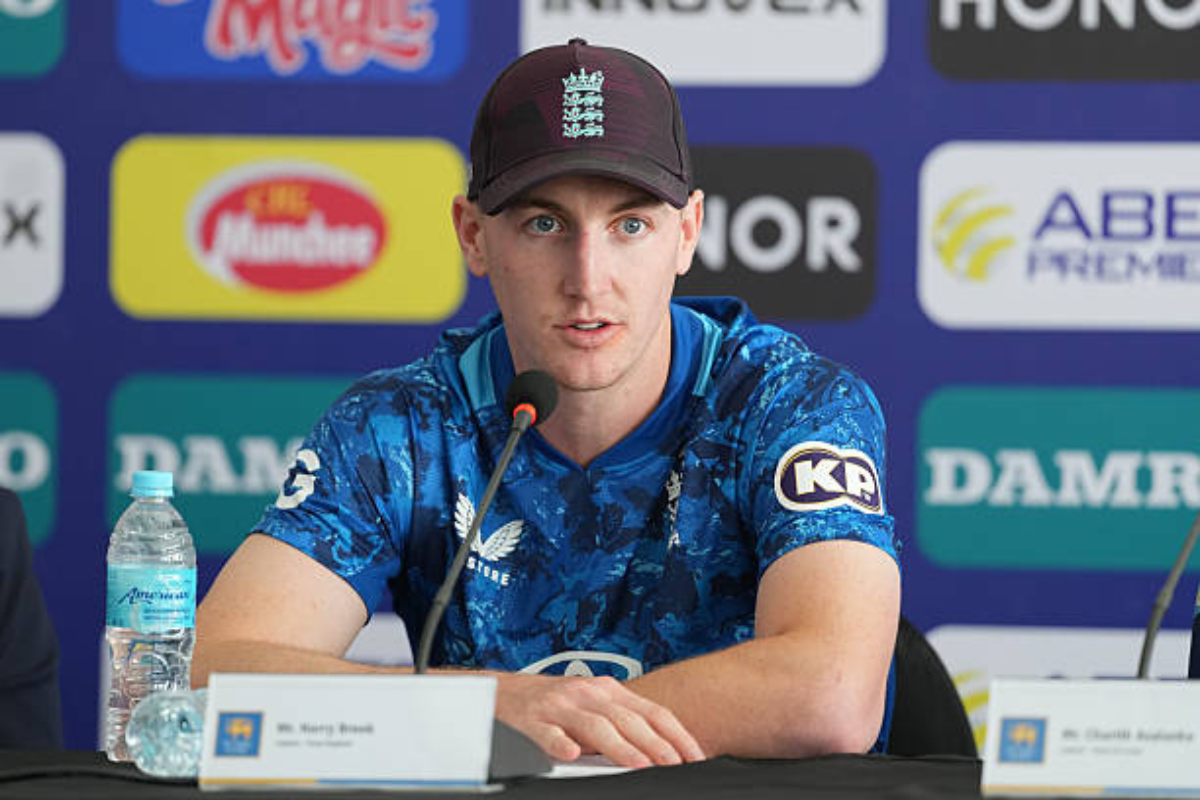
England captain Harry Brook has issued a strong warning ahead of the ICC Men’s T20 World Cup 2026, which will take place in India and Sri Lanka starting February 7.
England are placed in Group C with two-time T20 world champions West Indies, Scotland (who replaced Bangladesh), Nepal, and Italy, who will make their first appearance in the tournament. England will kick off their T20 World Cup 2026 campaign against Nepal in Mumbai on February 8. Next, they will play against the West Indies, followed by Scotland, and will finish their group stage matches against T20 World Cup newcomers Italy.
After England recent 3-0 series win over Sri Lanka in the Island nation, Harry Brook confidently stated at a pre-tournament press conference that scoring 300 runs in a T20 match in India is “a real possibility.”
“300 is a real possibility in India. We want to take the bowlers as much as we can,” said Brook. “You want to stay as cool as possible. We want to take it game by game. We are confident and want to go all the way.”
The comments from Harry Brook reflect the way modern T20 cricket is being played, thanks to a change brought by the ultra-aggressive batting style. Teams are now consistently breaching the 200-run mark due to power hitters, shorter boundaries, batting-friendly pitches, and the effect of dew during night games, especially in India.
The stats back the story: in only 17 T20 matches played in India since the last T20 World Cup in 2024, teams have posted 200+ run totals on nine occasions. The highest team total in T20Is being recorded in India was from the hosts, which was 297/6 against Bangladesh in Delhi in October 2024. Other notable scores include 271/5 by India against New Zealand in January 2026 and 247/9 against England in early 2025, highlighting a significant shift in batting strength in these conditions.
For a long time, a total of 200 runs in a T20 match was seen as tough to beat. Before 2022, even 180 was considered a compatible total, but now, 200 isn’t safe anymore. England’s massive score of 304 for 2 against South Africa in Manchester indicates this shift, which also marked as England’s highest-ever men’s T20I total and the third-highest in international T20 cricket history. Only Zimbabwe’s remarkable 344 for 4 against Gambia in 2024 and Nepal’s 314 for 3 against Mongolia in the Asia Cup 2023 surpass that score.
England’s 304 is also the fourth-highest in all men’s T20 matches worldwide and the highest ever recorded on English soil.
If such large totals can be achieved in England’s slightly more bowler-friendly conditions, it’s clear why Harry Brook thinks India, with its flat pitches, fast outfields, and smaller boundaries, could see teams regularly breaking the 300-run mark.
ALSO READ:
The Indian Premier League (IPL) has already shown what the T20 World Cup 2026 might look like. Run once unthinkable rates have now become a new norm. Sunrisers Hyderabad (SRH), for example, have consistently posted huge totals:
Punjab Kings are chasing a mammoth 262-run total, recording the highest successful run chase ever. These matches highlight how bowlers are now struggling to contain batters rather than control the game.
With changes like the impact player rule, which helps team deeper batting orders, and unlocking a more aggressive approach from the start, teams are always on the attack for all 20 overs, making high scores a common occurrence.
England batting approach showcases this shift—prioritising aggression over caution, a style that works well on Indian pitches. From top to bottom, they have power-hitters everywhere, with Phil Salt at the top, Tom Banton and Harry Brook in the middle, and Will Jacks at the bottom.
Not just England, but Australia have Marcus Stoinis and Glenn Maxwell. South Africa have Tristan Stubbs and David Miller, while India have Hardik Pandya, Shivam Dube, and Rinku Singh, who can hit sixes at will and with just brute power. New Zealand boasts finishers like James Neesham and Glenn Phillips. Likewise, almost all top-ranked sides have at least one power-hitter who can change the course of the match, within the blink of an eye.
At the T20 World Cup 2026, bowlers may face unprecedented challenges in containing this assault, while captains will need to rethink what “par” is.
For more updates, follow CricXtasy on Facebook, Instagram, Twitter, and YouTube.