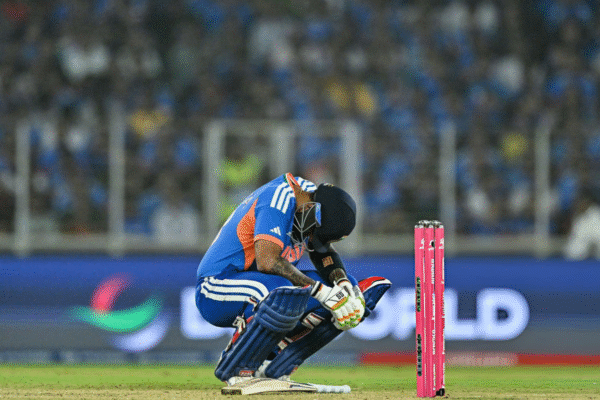


India's struggles are more than mere skill issues.
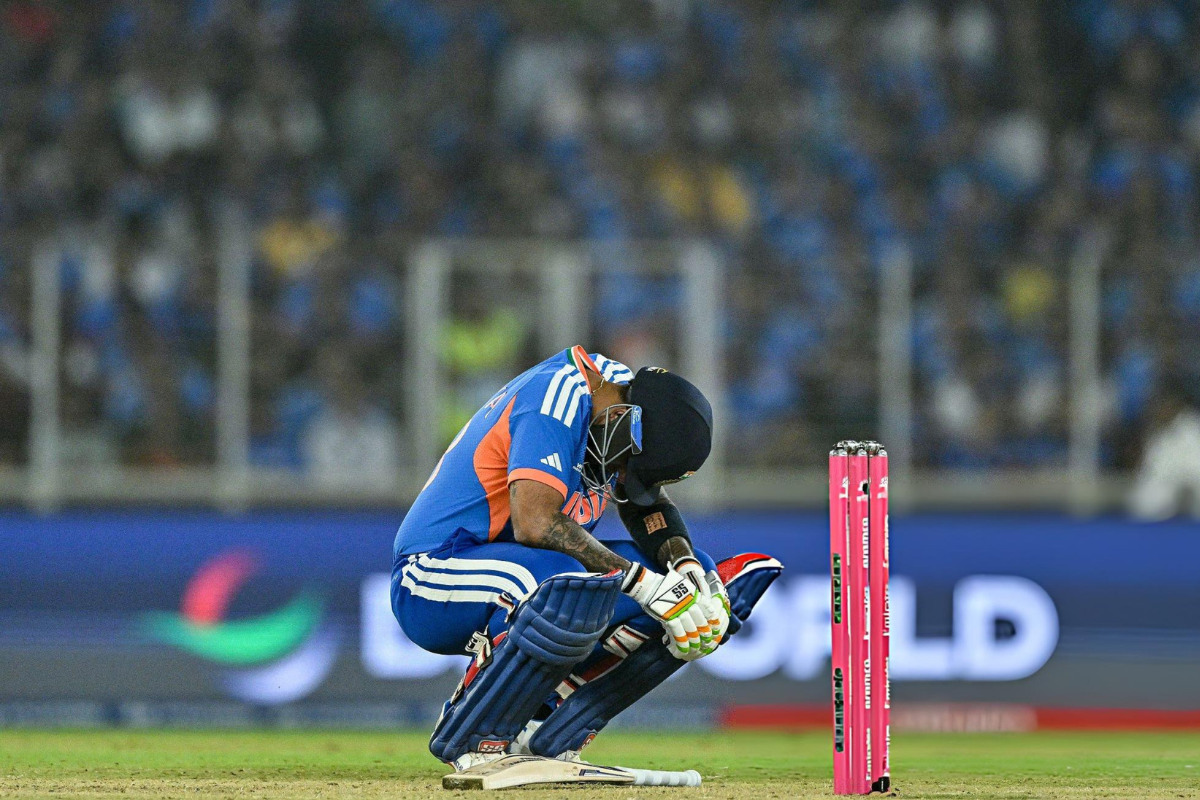
At this point, India are clearly not getting the home comfort despite playing at home in the T20 World Cup 2026. They won their first four games, none in dominant fashion, with a few worrying patterns surfacing before they were eventually outclassed by one of the tournament’s strongest sides in the Super 8. India have been a pale shadow of what they were expected to be so far.
The biggest issue has been their inability to put on dominant batting shows. The trend started right from the first game against the USA, and once big opponents came, their issues became exploitable. India’s batting has faltered big time, and probably at the worst time as well.
Indian batters have the sixth-worst average (20) in the tournament, the worst among all teams qualified for the Super 8 round, and they have struck at around 138.27. As many as 11 batters have been dismissed on a duck, again the most among all teams. Additionally, they have taken 5.20 deliveries for every boundary.
In contrast, they had the best strike rate (156.03) and second-best average (29.92), only after Spain, in the world between two T20 World Cup cycles. During this period, Indian batters had the second-most 50+ scores (39), second-most sixes (378), and smashed a boundary every 4.52 balls. They hit as many as eight individual centuries; the second-best was three by six different sides.
The pitches have undeniably been the main reason for India’s struggles, for they have not been as flat as they wanted. In the opening game, USA pacers extracted early movement before the spinners stifled in the middle overs. It required a Suryakumar Yadav special to bail them out.
Then, India couldn’t finish on a high note despite rapid starts against Namibia and Pakistan, where spinners again contained them with ease. Similarly, Netherlands took control in the middle overs in Ahmedabad, but their inexperience in slog overs allowed Shivam Dube to finish on a high note. In all these games, spinners have had enough assistance and whacking them wasn’t as easy when the field was spread.
ALSO READ:
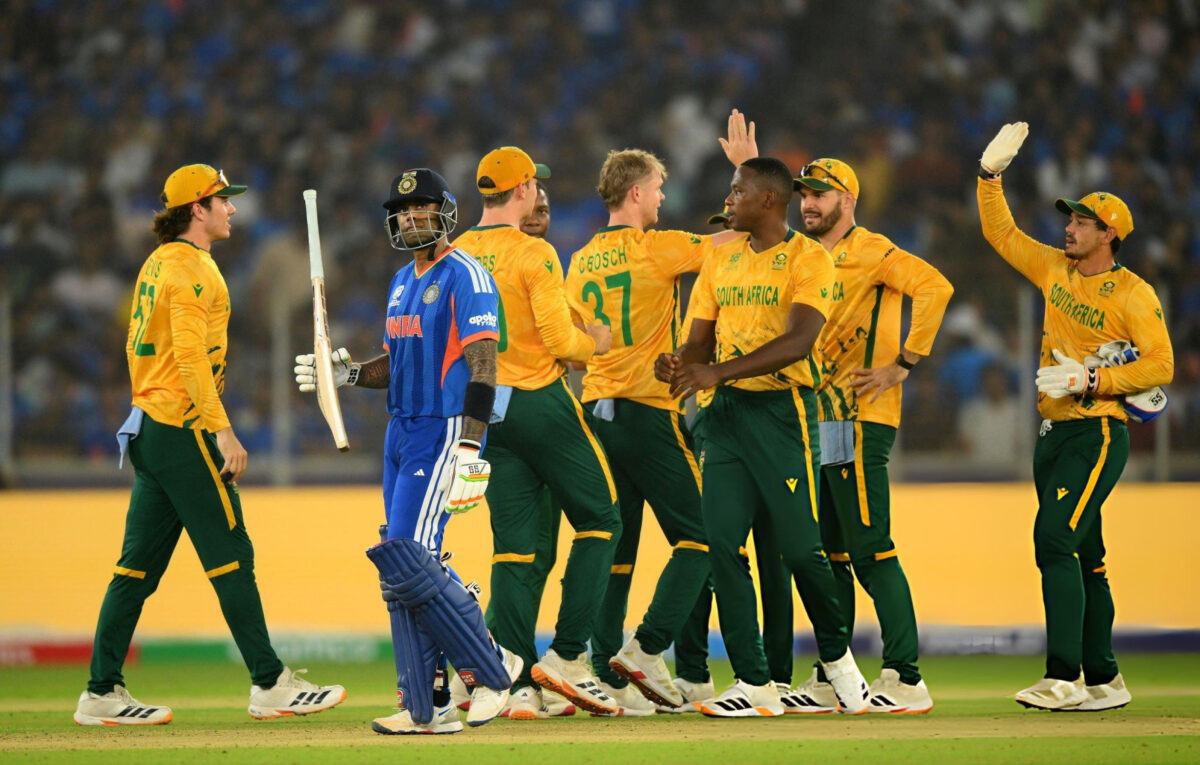
With all due respect, opponents were simply not experienced and skilled enough to apply pressure for long. But when India finally faced a worthy opponent in South Africa, they put on their worst batting show of the tournament. They bundled on a mere 111, with only one batter crossing the 20-run mark, and no batter could strike at more than 125.
Several talks have been about how Indian batters aren’t skilled enough to adapt to trickier decks. But that’s a half-truth, and they are surely skilled enough to adjust based on the situation. It’s just that they have played so much on flat surfaces that their muscle memory doesn’t allow them to tone down anymore; they just try to play everything through the line.
Between the two T20 World Cups, matches in India had the second-best run rate of 8.84, only marginally second to England (8.91), among all countries with at least 10 T20s. On average, teams scored 25.36 runs per over in India, only behind USA (26.28). A balls-per-six ratio of 15.15 was the third-best, behind USA (13.83) and West Indies (14.22).
The 2025 edition of IPL, the only one played between two T20 World Cups, had equally flat pitches, even if run-scoring wasn’t as high as in 2024. Batters had a strike rate of 152.39 and hit a boundary every 4.66 deliveries. Overall, India played 44.73% of total T20Is at home, as well as a full IPL season, between two cycles.
Even in away series, India’s batting average and run rate were superior to what they have managed at the T20 World Cup 2026. Across five overseas rubbers, their lowest average came in Sri Lanka (22.68), while their lowest run rate was recorded in Australia (8.77). In contrast, they have averaged just 20.70 and scored at 8.59 runs per over in the T20 World Cup 2026.
What they are experiencing in the tournament stands in stark contrast to the momentum and method with which they built up to it. Where India actually faltered was in their preparations, as these numbers show. They consistently batted on high-scoring pitches at home, despite knowing the tournament’s history.
No matter how rapidly teams have scored in bilaterals, the T20 World Cups have always been decent scoring, with some help for bowlers. The trend has unsurprisingly continued in a fresh season. India reportedly complained about the pitch after the USA scare, and Hardik Pandya also stressed the need for flatter pitches.
Surely, India are unprepared for these decks, and it’s not down to a skill issue. Can batters adapt better? Yes. Are they entirely at fault? Partially, yes. Do they lack skills? Certainly, no.
For more updates, follow CricXtasy on Facebook, Instagram, Twitter, and YouTube.