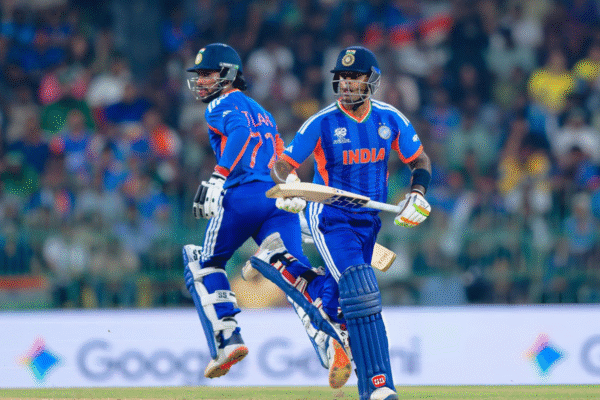


India batters Tilak Varma and Suryakumar Yadav have struggled.
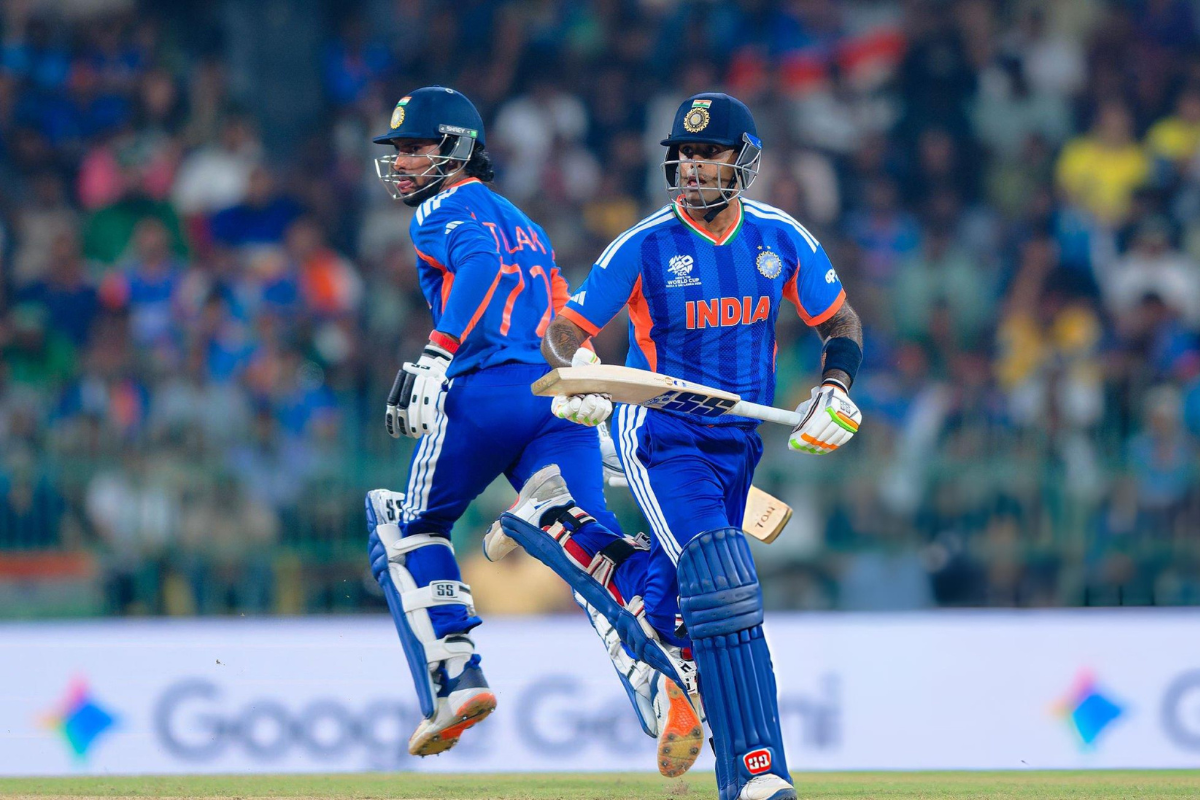
India have shown multiple loopholes in their modus operandi and resources despite winning the initial four games at the T20 World Cup 2026. They have encountered one issue or another in every game, but the biggest issue has been their upper-middle order. Tilak Varma and Suryakumar Yadav have found it arduous to get going, especially against spin.
In four games so far, Tilak has scored 106 runs at an average of 26.50 and a strike rate of 120.45 with the willow, including a best of 31. Meanwhile, Suryakumar has scored 162 runs, averaging 54 and striking at 136.13 in four innings, with a best of 84*. His numbers are decent due to that knock against USA; since then, he has scores of 12, 32, & 34 at a strike rate of 111.42 across three outings.
ALSO READ:
The two have been below par as a pair so far, and their obvious issues against spinners have been easy to exploit, even on not-so-tacky wickets. Tilak and Suryakumar have together scored 84 runs at a run rate of 6.14 in this tournament, and their tepid approach has stagnated India’s innings on multiple occasions. In the middle overs, India have the fifth-lowest strike rate (119.44), and they have taken as many as 7.44 deliveries for every boundary.
That’s down to how these two have batted because they have faced around 55.09% of the team’s total middle-over deliveries. Tilak strikes at 86.49 and has hit only two boundaries in 37 balls, while Suryakumar’s strike rate crawls at 117.07 with 10 boundaries in 82 balls. Tilak’s strike rate is the second-lowest, while the Indian captain stands 13th from the bottom among all batters with at least 30 balls between 7 and 15 overs.
Fortunately for India, a few individual flashes of brilliance, either from the top or lower middle order, have helped them post above-par scores every time. Ishan Kishan and Hardik Pandya stepped up against Namibia, while Kishan followed it up with another blistering knock against Pakistan. Shivam Dube then wreaked havoc against Netherlands.
As mentioned, Tilak Varma and Suryakumar Yadav have particularly struggled against spinners, and teams have been smart enough to attack them with slow bowlers. Tilak has a strike rate of 93.61 and has been dismissed twice in three innings against spin this T20 World Cup. Additionally, he plays around 48.93% of dot balls and takes as many as 9.40 balls for every boundary.
Meanwhile, Suryakumar has struck at 107 against slow bowlers, with two dismissals. He plays around 33.8% dot balls and hits a boundary every 10.14 deliveries. Now, when the two bat together, things become a lot easier for opponents, and they frontload their spinners.
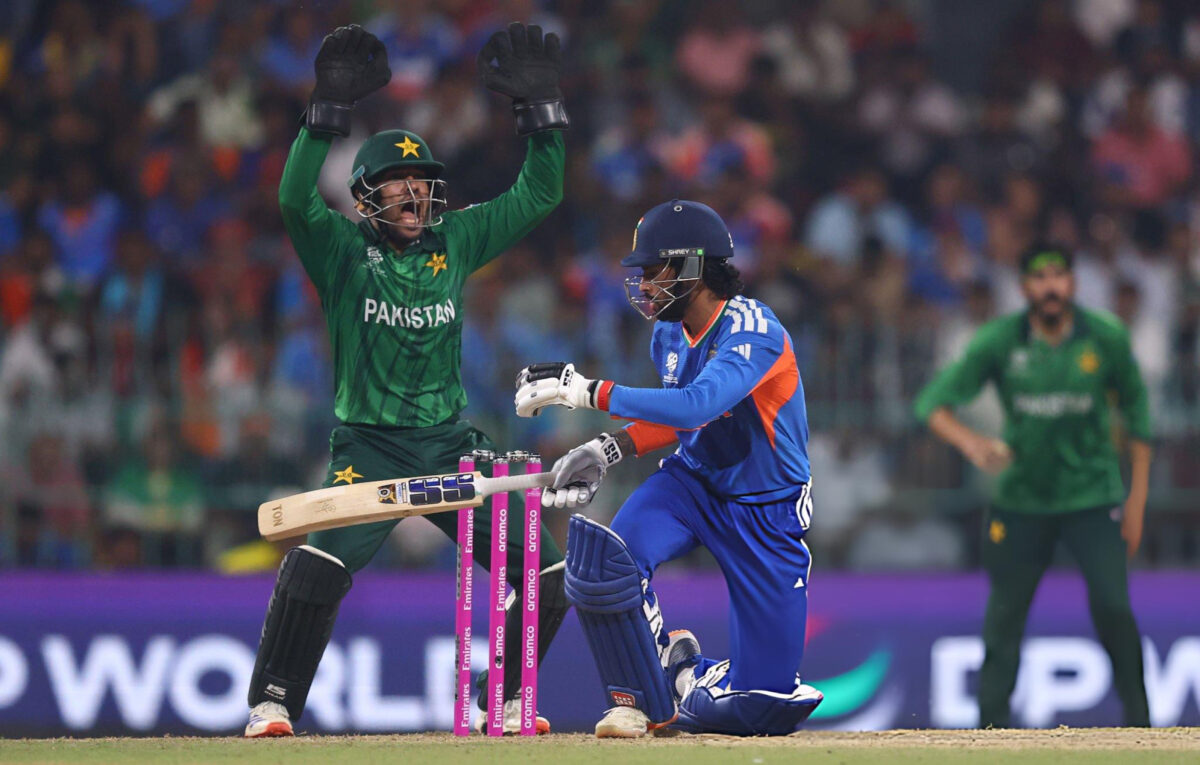
For instance, USA and Namibia used as many as seven overs of spin in the middle overs. Meanwhile, Pakistan didn’t use pacers at all. Similarly, Netherlands employed a similar strategy and sneaked three overs of spin, mostly against Tilak and Suryakumar.
Tilak has faced a whopping 75.67% of spin balls in the middle overs, while Suryakumar’s tally stands at 69.51% in the tournament. Tilak is in the top 10 batters with the highest % of spin balls despite playing three games in India. Several other players, such as Matthew Renshaw, Pathum Nissanka, and Glenn Maxwell, who have faced more spin balls, have played in Sri Lanka, where spinners have found ample assistance and done the heavy lifting.
Tilak and Suryakumar don’t work together since they lack complementary skills against spin. The southpaw struggles against all types of spin, especially when lines are straighter. Meanwhile, Suryakumar has issues with left-arm finger spin, which came to the fore against Namibia.
Their concerns are likely to intensify in the Super 8 stage against quality opponents like South Africa, Zimbabwe, and West Indies, who now have enough data from the initial phase, along with the resources, to target these weaknesses effectively. South Africa, for instance, have a strong spin arsenal in George Linde, Keshav Maharaj, and Aiden Markram. Zimbabwe can rely on Sikandar Raza, Ryan Burl, and Graeme Cremer; West Indies possess potent spin options in Akeal Hosein, Gudakesh Motie, and Roston Chase.
From the available resources, no. They have Sanju Samson as the only other batter in the squad, but his credentials are unproven outside the opening slot. Then, India can’t afford to shuffle their batting positions either.
Tilak can’t work outside the top three, and surely not below No.4. Apart from spin issues, he can also lack power game against shorter lengths, and India have better pace-hitters in the middle order. He stays a bit too side-on, so his front hip probably remains closed for a bit longer, and he gets cramped against straighter lines.
Suryakumar also needs a few balls to build himself, and he has hardly batted outside the top four in this setup. Moving him will alter a lot of things and raise fresh problems, even if he’s powerful against pace. India can move one of Shivam Dube or Axar Patel to No.4, but Suryakumar last batted outside the top four in T20s in 2024.
Since 2024, he has batted in the top four in 97.56% of times, with only two out of 82 innings at No.5. Hence, the only solution is that the two need to be proactive and avoid getting stuck right from the start. They would also want flatter pitches, where spinners don’t get enough grip and turn, which nullifies their threat.
For more updates, follow CricXtasy on Facebook, Instagram, Twitter, and YouTube.